Your engine is skipping. It won't reach full speed. You're pumping the primer bulb every time you head out, and something clearly isn't right.
Before you start shopping for coils, spark plugs, or a new carburetor, take a closer look at your fuel line clamps. Most people never think about them. They should.
At Clark Marine, this is one of the most common issues our service team sees walk through the door. Rob Brown and technician Nelson recently broke down the problem (and the fix) in one of our tech tip videos. We figured it was worth putting into writing, too.
⛽ Why Your Fuel Line Deserves More Attention Than You Think
Boat fuel lines take a beating. They sit in the sun all season and deal with ethanol-blended fuel on top of constant temperature swings. That wear eventually shows up as cracking or softening, or sometimes the hose just feels tacky to the touch.
Modern marine fuel hoses are built for it. They're EPA-compliant, low-permeation hoses with multiple layers inside, including a liner designed specifically for ethanol protection. That layered construction keeps fuel in and air out.
But the hose is only as good as the clamp holding it in place. And that's where a lot of boaters run into trouble without realizing it.
❌ The Clamp Most People Grab (and Why It's a Problem)
If you've ever replaced a section of fuel line yourself, you probably went to the hardware store and picked up a standard stainless steel screw clamp. They've been around forever. You see them on cars, on garden hoses, on just about everything.
And they do tighten down. No question. But tightening down is actually the problem.
When you crank a screw clamp onto a marine fuel hose, it doesn't apply pressure evenly. It digs into the hose material. Because these hoses are multi-layered, that means you can puncture the inner ethanol liner without even realizing it.
Once that liner is breached, ethanol starts working on the outer layers of the hose. On top of that, the uneven clamping force creates tiny gaps you can't see with the naked eye. You're not leaking fuel out, but you are sucking air in. That's enough to throw off engine performance in a big way.
Common signs of an air leak in your fuel system
- Engine skipping or misfiring
- Won't reach full horsepower
- Rough or inconsistent idle
- Constantly needing to re-prime the bulb
- Engine stalling under load
The frustrating part? You won't usually see fuel dripping anywhere. The leak is on the suction side, pulling air into the line instead of pushing fuel out. That makes it tricky to diagnose if you don't know what to look for.
✅ The Right Clamp and Why the Manufacturer Uses It
Look at the original equipment fuel lines on a Mercury outboard or most other marine engines, and you'll notice the clamps look different from what you'd find at the hardware store. They're called ear clamps, and they work on a completely different principle.
Instead of a screw that tightens a band unevenly, an ear clamp uses a crimping mechanism. You squeeze it once with a pair of special pliers (called Oetiker pliers), and it locks down with even, consistent pressure all the way around the hose.
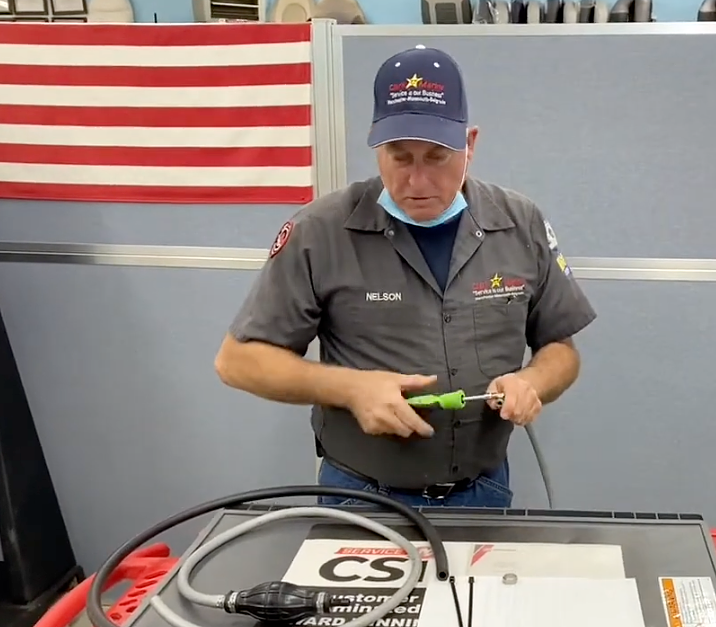
Why ear clamps are the better choice for fuel lines
- They don't cut into the hose or damage the inner liner
- They maintain a perfectly circular shape with no gaps
- They deliver about 60 PSI of clamping force, compared to roughly 20 PSI for a standard clamp
- They're the same type used by the original equipment manufacturer
One small detail separates the fuel-rated clamps from the non-fuel-rated ones that look nearly identical. Nelson calls them fangs. They're small interlocking teeth that create a complete seal when crimped. No fangs? No reliable seal. And you really can't tell the difference unless you hold them up side by side.
🔧 So Are Screw Clamps Useless?
Not at all. They're great for holding wiring in place, securing non-pressurized lines, and plenty of general-purpose jobs around the boat. They're just not designed for fuel applications where you need a truly airtight connection under consistent pressure.
Right tool, right job. You wouldn't bet your day on the water on a clamp that can't hold a proper seal.
💡 Before You Start Replacing Parts
If your engine has been acting up with any of the symptoms above, take a good look at your fuel system before you start throwing money at ignition parts.
Quick fuel system checklist
- Inspect your fuel lines for cracking, softening, or discoloration (old lines often turn reddish, and techs call it "red line")
- Check every clamp connection for the right clamp type
- Look for signs of uneven compression or cuts in the hose where clamps sit
- Make sure all hoses are EPA-compliant, low-permeation rated
If you want to tackle the repair yourself, Clark Marine can get you the right fuel-rated hoses, ear clamps, and Oetiker pliers in our parts department. And if you're not sure what you're looking at, just bring the parts in. Nelson or one of our techs will take a look at no charge and make sure you're headed in the right direction.
⚓ We're Here When You Need Us
Fuel system issues aren't always dramatic. Sometimes it's just a slow decline in performance that you chalk up to the engine getting older. But the fix is usually simpler and cheaper than you'd expect.
Have questions? Stop by the shop or schedule a service appointment. We're always happy to take a few minutes and point you in the right direction. There's a reason people choose Clark Marine, and this kind of stuff is a big part of it.
Frequently Asked Questions
1. What kind of clamp should I use on boat fuel lines?
Fuel-rated ear clamps (also called Oetiker clamps) are the way to go. They provide even, circular pressure without cutting into the hose, and they deliver about three times the clamping force of a standard screw clamp. Look for clamps with "fangs," which are small interlocking teeth that create a complete seal.
2. Can I use a regular hose clamp on a marine fuel line?
It's not recommended. Standard stainless steel screw clamps can dig into the multi-layered hose, puncture the inner ethanol liner, and create small gaps that suck air into the fuel system. They work fine for non-fuel applications, but not for anything carrying gas.
3. Why does my outboard engine keep losing prime?
If you're constantly re-priming the bulb, there's likely an air leak somewhere in your fuel system. Old, deteriorated fuel lines and improper clamp connections are the most common culprits. A quick inspection of your hoses and clamps is the best first step before replacing more expensive ignition components.
4. How do I know if my boat fuel line needs to be replaced?
Look for cracking, softening, discoloration (old lines often turn reddish), or a sticky, tacky feel on the hose surface. If the line isn't marked as EPA-compliant or low-permeation, it's probably overdue for replacement. Lines that sit in the sun take the most abuse and should be checked at the start of every season. Proper boat winterization goes a long way toward protecting your fuel system during the off-season, too.
5. What are Oetiker pliers?
Oetiker pliers are a specialty crimping tool designed for ear clamps. They squeeze the clamp's "ear" to lock it in place with consistent pressure. They're readily available and a worthwhile investment if you do your own fuel line work. Clark Marine can also order them for you.