If you’re shopping for a pontoon boat, it’s easy to assume they’re all pretty similar. Same general shape, same basic setup, same experience on the water. And on the surface, that might look true.
But once you start digging into how different brands actually build their boats, the differences add up fast. Vinyl weight, structural framing, how the seats handle water, how much control you get over the layout. These are the things that separate a boat you enjoy for a couple of seasons from one that still feels solid years down the road.
At Clark Marine, we sell Avalon pontoons, and we’re upfront about why. We’ve seen how they hold up compared to other brands. But rather than just telling you to take our word for it, here’s a breakdown of what actually differs across manufacturers so you can compare for yourself.
💺 Vinyl Quality: Not All Upholstery Ages the Same
Vinyl weight is measured in ounces, and that number tells you a lot about how your seats will hold up over time. Heavier vinyl resists sagging, cracking, and UV damage better than lighter-weight alternatives.
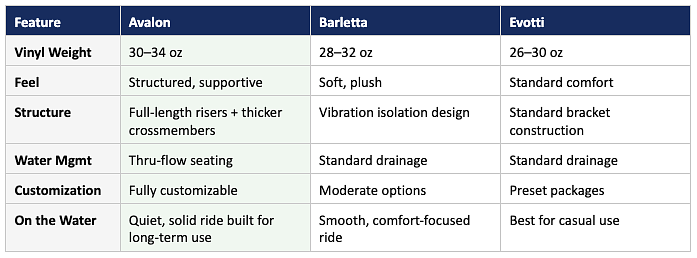
Avalon uses 30–34 oz vinyl, which is on the heavier end of the market. It feels structured and supportive when you sit down, and it stays that way season after season. Barletta comes in at 28–32 oz with a softer, plush feel out of the box. Evotti runs 26–30 oz, which is standard marine-grade vinyl.
The softer feel on a showroom floor can be appealing. But softer vinyl at a lower weight tends to wear faster, especially in Maine where your boat sits in the sun all summer and then gets stored through long winters. Heavier vinyl holds its shape longer and stands up better to real-world use.
🔩 Structural Framing: What’s Underneath Matters
The structural framing of a pontoon is one of those things most buyers never think to ask about. But it’s what keeps your boat feeling tight and solid instead of rattling and flexing as it ages.
Avalon builds with full-length risers and thicker crossmembers. That means the deck is supported consistently from bow to stern, and the connection points between the deck and tubes are reinforced to handle years of stress. You can actually feel the difference on the water. The ride is quieter, and the boat tracks straighter.
Barletta uses a vibration isolation design, which prioritizes a smooth, cushioned ride. Evotti uses standard bracket construction, which is functional but doesn’t offer the same rigidity over time.
If you’ve ever been on an older pontoon that feels like it’s coming apart at the seams, that’s usually a framing issue. Stronger framing up front means fewer problems down the road.
💧 Water Management: Keeping Your Seats Dry
Water trapped inside seat cushions is one of the fastest ways to shorten the life of your upholstery. It leads to mildew, staining, and that musty smell nobody wants on their boat.
Avalon uses what they call thru-flow seating. Instead of trapping water inside the seat base, the design lets water drain through and out. Your cushions dry faster, stay cleaner, and last longer because moisture isn’t sitting against the foam and vinyl after every rain or splash.
Both Barletta and Evotti use standard drainage systems. They work, but they don’t actively move water away from the seating the way Avalon’s thru-flow design does. Over multiple seasons, that difference shows up in how your seats look and smell.
🎨 Customization: Building Your Exact Boat
Some brands let you pick from preset packages. You choose Package A, B, or C, and that’s what you get. Avalon takes a different approach. You can customize layouts, colors, features, and options to build exactly the boat you want.
That matters more than people realize. Maybe you want a specific seating layout for fishing and family use. Maybe you have a color combination in mind that matches your dock or your tow vehicle. With Avalon, you’re not limited to what someone else decided should go together.
Barletta offers moderate customization options, while Evotti tends to tie features to preset packages. If having choices matters to you, it’s worth asking how much flexibility each brand actually gives you before you commit.
⚙️ The Biggest Difference Is Long-Term
A lot of pontoon boats feel great on day one. Comfortable seats, clean lines, smooth ride. The real question is how that boat feels after three, five, or ten seasons on the water.
Heavier vinyl that doesn’t sag. Structural framing that doesn’t loosen. Seats that actually drain instead of trapping moisture. Full control over how your boat is built. Those are the things that add up over years of ownership.
If you’re comparing pontoon brands and want to see the differences in person, come see us at Clark Marine. We’ll walk you through it. Check out our current Avalon inventory or learn more about why we carry Avalon.
❓ Frequently Asked Questions
1. What vinyl weight should I look for in a pontoon boat?
Higher is generally better for longevity. Vinyl in the 30–34 oz range resists sagging, cracking, and UV damage better than lighter options. If you plan to keep your boat for more than a few seasons, vinyl weight is worth paying attention to.
2. What is thru-flow seating on a pontoon?
Thru-flow seating is a design that lets water drain through and out of the seat base instead of getting trapped inside. It keeps cushions drier, reduces mildew, and helps your upholstery last longer.
3. Can I customize an Avalon pontoon to fit my needs?
Yes. Avalon offers full customization on layouts, colors, and features. You’re not locked into preset packages, so you can build a boat that fits how you actually plan to use it. Browse current Avalon inventory to see what’s available, or contact us to start a custom build conversation.
4. How do I know which pontoon brand is right for me?
The best way is to see them side by side. Come to Clark Marine and we’ll walk you through the construction differences so you can feel the quality for yourself.