
A propeller has a major effect on how a boat accelerates, handles, carries weight, and reaches its proper engine RPM. When choosing a replacement or upgrade, one of the first decisions is whether to use aluminum or stainless steel. Both materials can work well, but they are designed for different priorities.
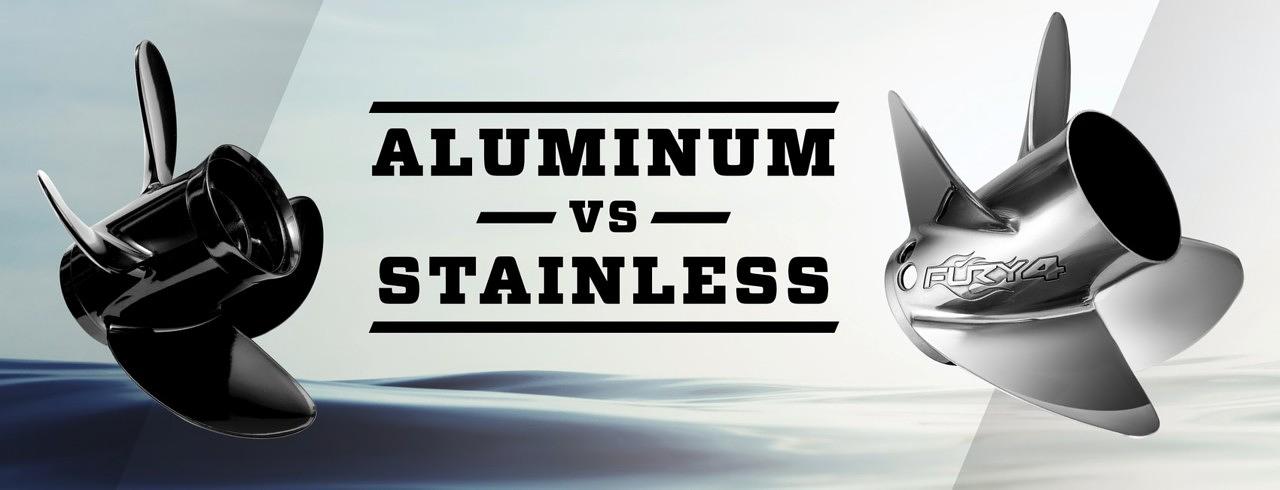
When an Aluminum Propeller Makes Sense
For many recreational boaters, an aluminum propeller is all they need. Aluminum props are affordable, versatile, and capable of providing dependable performance for cruising, fishing, and general family use.
They are especially practical on lower- and mid-horsepower(below 150HP) boats that are not being pushed for maximum speed or acceleration. An aluminum prop is also a smart choice for boaters who operate in unfamiliar, shallow, or rocky water where there is a greater chance of striking the bottom or an underwater object.
One important advantage of aluminum is how it reacts during an impact. Because the material is softer, the blades are more likely to bend, chip, or break and absorb more of the force from a strike. Yamaha specifically recommends considering aluminum in shallow water with known obstructions because it transmits less force to the gearcase during an impact.
That does not guarantee that the lower unit will be protected, especially during a severe or high-speed strike. However, an aluminum prop is more likely to bear the visible damage instead of passing as much of that force into the prop shaft, gears, bearings, and other lower-unit components.
Aluminum props are also less expensive to replace. If one is badly damaged, replacement may be more economical than repair. That lower cost also makes aluminum a popular choice for a spare prop kept onboard.
Drawbacks of Aluminum
The softer material that can help during an impact also creates some performance limitations. Aluminum blades can flex more under heavy loads, especially on higher-horsepower boats. When the blades flex, they may not hold their intended shape as precisely, which can affect acceleration, efficiency, grip, and top speed.
Aluminum is also easier to damage. Even relatively minor contact with rocks, gravel, or the bottom can bend a blade or damage its edge. A bent or chipped prop should not be ignored, since continued use can create vibration and place additional stress on the prop shaft, seals, bearings, and gearcase.
For normal cruising and everyday recreational use, these tradeoffs are often acceptable. For heavier boats or owners looking for more precise performance, stainless steel may be worth considering.
When a Stainless Steel Propeller Makes Sense
Stainless steel propellers are stronger, more rigid, and more resistant to blade flex. This allows manufacturers to use thinner, more precisely shaped blades that maintain their design under load.
That rigidity can improve acceleration, grip, handling, and top-end performance. Stainless steel props are commonly used on higher-horsepower boats, performance boats, bass boats, watersports boats, and boats that regularly carry heavy passenger or equipment loads. They can also provide better control when the motor is mounted higher, the boat is trimmed more aggressively, or the propeller is operating near the surface.
A stainless prop may be a good fit when the owner wants:
- Stronger hole shot for skiing, tubing, or getting a loaded boat on plane
- Better grip and control in turns or rougher water
- Less blade flex on a larger or higher-horsepower motor
- More precise performance than a basic aluminum prop can provide
Stainless steel is also more resistant to smaller nicks, sand, and ordinary wear. Because the material is valuable and repairable, a damaged stainless prop can often be professionally rebuilt rather than replaced.
Drawbacks of Stainless Steel
The most obvious drawback is cost. Stainless props are considerably more expensive than aluminum, and not every boat will see enough improvement to justify that added expense.
The greater concern is what can happen during a hard impact. Stainless steel blades are much less likely to bend or break away easily. Because the prop remains rigid, more of the impact force may be transferred into the prop shaft and lower unit.
A severe strike can damage the prop shaft, seals, bearings, gears, hub, driveshaft, or gearcase housing. At higher speeds, that force can potentially extend beyond the lower unit and place stress on other engine or mounting components. The exact result depends on the speed, angle of impact, object struck, prop design, and hub system.
This does not mean a stainless prop will always destroy a lower unit when it hits something. Modern prop hubs are designed to help absorb shock, and damage can occur with either material. However, stainless steel generally offers less of a sacrificial effect than aluminum.
For boaters who frequently operate around rocks, stumps, shoals, or shallow water, that added risk should be weighed against the performance benefits.
Which Propeller Is Better for Your Type of Boating?
An aluminum propeller is usually the better choice for casual cruising, fishing, family boating, lower- to mid-horsepower applications, and areas where underwater contact is more likely. It provides good everyday performance, costs less to replace, and may absorb more of the damage during a prop strike.
A stainless steel propeller is generally better for higher-horsepower boats, watersports, performance boating, heavy loads, and owners who want improved acceleration, handling, or top-end speed. It holds its shape better under load, but it costs more and can transfer more impact force into the drivetrain.
Material Is Only One Part of the Decision
Choosing aluminum or stainless steel is important, but it is not the only factor. Diameter, pitch, blade count, rake, cup, engine height, hull design, and normal boat load all affect performance.
A stainless prop with the same listed pitch as an aluminum prop may not run exactly the same. The blade design and stiffness can change engine RPM, acceleration, and handling. Any replacement prop should allow the motor to operate within its manufacturer-recommended wide-open-throttle RPM range under a normal load.
Too much pitch may prevent the engine from reaching the correct RPM. Too little pitch may allow the engine to exceed its recommended range. Either problem can reduce performance and place unnecessary stress on the motor.
Let Clark Marine Help You Choose
There is no single propeller that is best for every boat. The right choice depends on your boat, motor, typical load, operating conditions, and what you want to improve.
When comparing options, it helps to know:
- Your current propeller size and pitch
- Your engine’s wide-open-throttle RPM
- Your normal passenger and gear load
- Whether you want better acceleration, speed, handling, or economy
- Whether you regularly boat in shallow or rocky water
Whether you need an affordable replacement, a spare aluminum prop, or a stainless-steel performance upgrade, contact Clark Marine. Our team can help you find an option that matches your boat and how you use it.
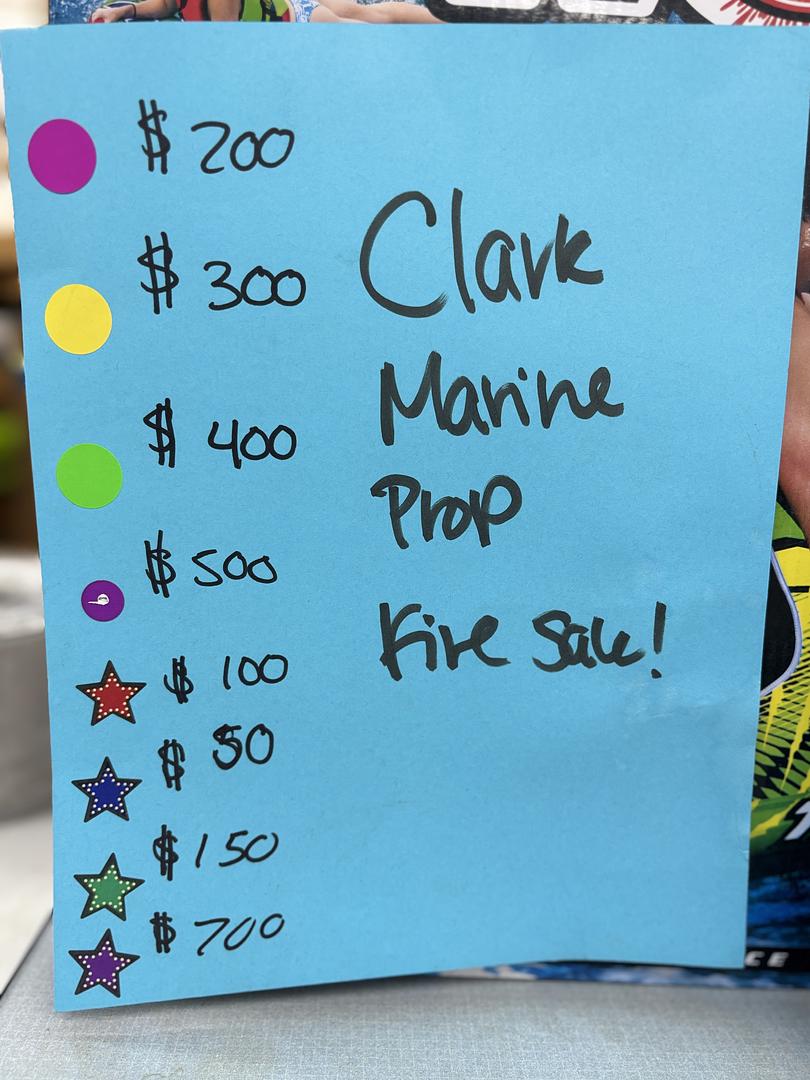
Check out current deals going on during our Fire Prop Sale! All used and out-of-box props are discounted and waiting for the right owner...