8 Pontoon Features a Master Technician Would Never Overlook (Even If Nobody Else Notices Them)
Rob's Boat Buyer's Guide | Part 2
By Rob Brown, Master Marine Technician | Over 45 Years in the Boating Industry
I've spent more than 45 years in the marine industry, and I've developed a few habits.
One of them is looking underneath pontoon boats.
Most people shopping for a new pontoon are admiring the furniture, testing out the lounge seats, and imagining themselves cruising around the lake with their families.
And I love that. Buying a boat should be exciting!
But while everyone else is admiring the upholstery, I'm usually crawling around underneath the thing looking at the tubes.
I'm looking at construction, protection, welding, rigging, and all the little details that have a funny way of becoming very important about ten years down the road.
You see, there's a difference between selling boats and spending decades selling, servicing, and repairing them.
At Clark Marine, we've represented Avalon Pontoons since 1998. That means we've had the opportunity to see how these boats hold up over time, what makes them enjoyable to own, and which features customers appreciate long after the excitement of delivery day.
And after all these years, I've learned that some of the most important things on a pontoon are the things you barely notice.
Here are eight features I'm particularly fond of, and why I think they're worth your attention.
Key Takeaways: 8 Pontoon Features Worth Considering
- Side protector keels: A valuable buffer against the occasional less-than-graceful encounter with a dock.
- Nose cone keels: Additional protection for vulnerable areas at the front of your pontoons.
- Lifting fins: Can improve lift, acceleration, and handling when properly matched to the boat and engine.
- Hydraulic steering: Makes a pontoon more comfortable and easier to operate, particularly with higher-horsepower outboards.
- Upgraded Ultrafine vinyl: Quality upholstery is worth considering if you want your boat to age well.
- Seat covers: One of the simplest ways to protect expensive furniture.
- A properly rated ski tow bar: Important for families planning to enjoy approved tow sports.
- A privacy station: A practical convenience that can make long days on the water much more comfortable.
Not everybody needs every feature on that list.
But if you're buying a pontoon you hope to keep for the next 15 or 20 years, I think they're worth understanding.
And we're starting with my personal favorite.
1. Side Protector Keels: For the Love of Pontoons, Please Consider Them.
I have a difficult time looking at a pontoon without side keels.
I really do.
My family will tell you I practically stand there in horror.
Now, I realize this isn't a normal reaction to something most people don't even know exists. But after decades of working on pontoon boats, I've developed some strong feelings about protecting them.
Here's why.
Side protector keels are aluminum protective structures positioned along the sides of the pontoon tubes.
Think about how you use your boat.
You're coming into the dock after a wonderful afternoon on the lake. Maybe the wind catches you. Maybe you misjudge your approach. Maybe your brother-in-law insists he's an excellent captain.
And suddenly, you're coming into that dock a little hotter than you intended.
It happens.
A side keel can provide a valuable buffer between the dock and the pontoon itself, helping reduce certain types of contact with the tube.
And believe me, I'd much rather see a protective component take some punishment than the pontoon itself.
That doesn't make the boat indestructible. You still need proper fenders, responsible operation, and a little common sense.
But when I look at a boat I hope somebody is going to own for 15 or 20 years, I appreciate those extra layers of protection.
It's one of the features I like about appropriately equipped Avalon pontoons.
And if you're comparing two boats, I'd encourage you to ask whether they have side keels.
It's not particularly glamorous.
Neither is paying to repair a damaged pontoon.
2. Nose Cone Keels: Because the Front of Your Pontoons Deserves Some Love, Too.
While we're underneath the boat, let's take a look at the nose cones.
The nose cones are the forward sections of your pontoons. They're the parts that meet the water first, and they can encounter floating debris, shallow-water obstacles, and the occasional unintended contact.
I'm a fan of properly designed nose cone keels because they provide an additional measure of protection in an area that's vulnerable to damage.
And here's something I've learned over the years:
Protecting a boat before something happens is generally a whole lot more enjoyable than fixing it afterward.
The exact protection provided depends on the design and how contact occurs. A keel won't eliminate every risk, and it doesn't mean you can run your boat into things without consequences.
But this is one of those construction details that I appreciate when I'm evaluating the long-term durability of a pontoon.
Customers don't always notice them.
I do.
And if you ask me about them, I'll be happy to crawl underneath the boat and show you why.
3. Lifting Fins: What Happens Underneath Makes a Big Difference Up Top.
Now we're getting into performance.
Lifting fins, also called lifting strakes, are designed to influence how a pontoon moves through the water.
Depending on the hull design, engine, load, and configuration, properly designed lifting fins can contribute to additional lift, improve acceleration, and change how the boat handles.
But here's where my technician brain comes into play.
You can't just look at a boat, see some lifting fins, and assume it's going to perform beautifully.
A pontoon is a complete package.
The tubes, horsepower, propeller, motor mounting height, weight distribution, and lifting surfaces all have to work together.
I've seen plenty of situations where people assume the answer to a performance problem is simply adding horsepower.
Sometimes it is.
But other times, the problem is how the boat is configured.
That's why I like discussing lifting fins when we're building a boat for someone who expects more spirited performance, regularly carries passengers, or plans to enjoy water sports.
Do you need them to putter around your little pond with a cup of coffee?
Probably not.
But if performance matters to you, this is something worth discussing before you buy.
And yes, I would rather spend money on properly engineered performance than on a fancy accessory that doesn't make the boat work any better.
4. Hydraulic Steering: Because Driving Your Boat Shouldn't Be a Workout.
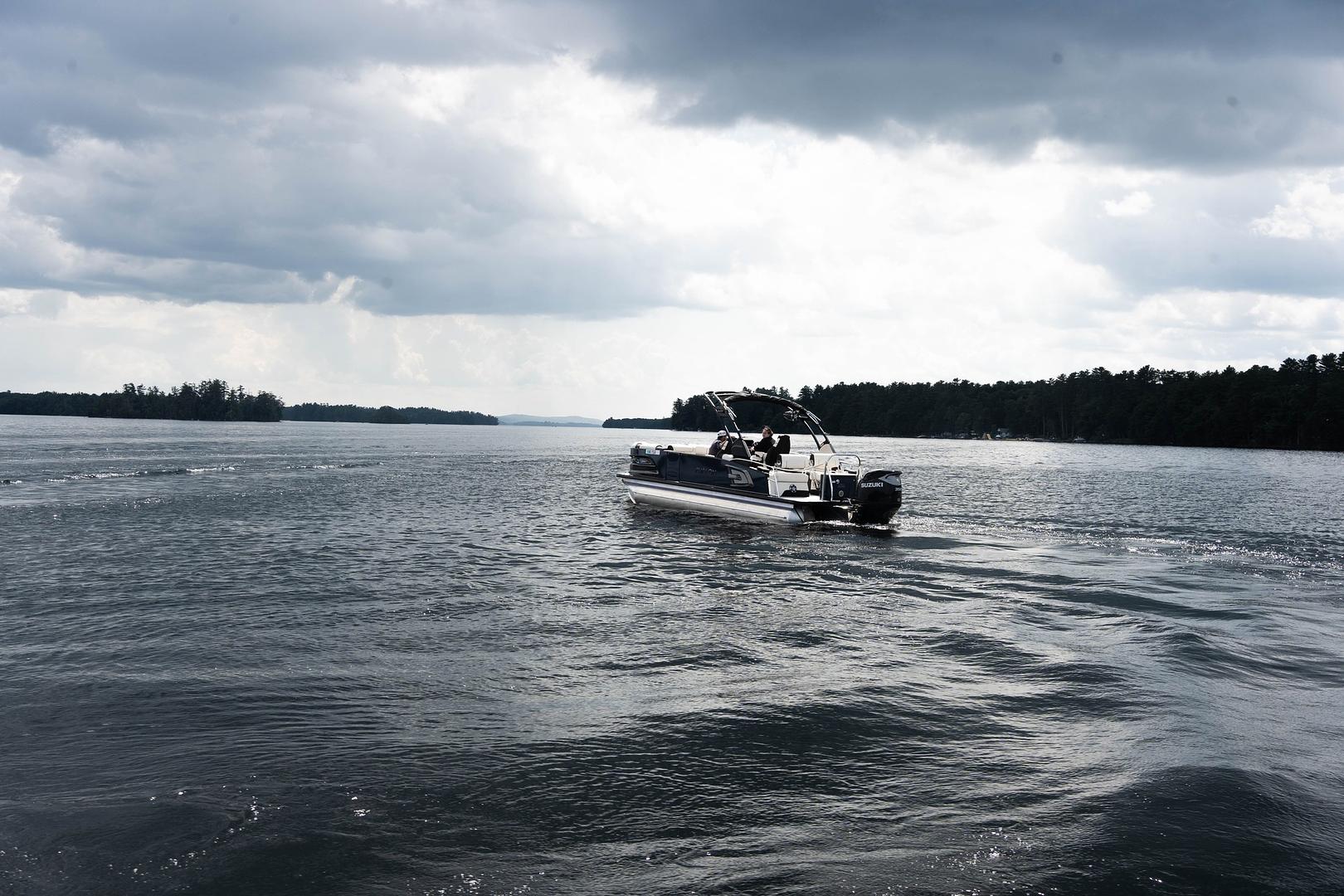
If there's one feature I think deserves more attention when people are shopping for pontoons, it's hydraulic steering.
And I'm not particularly interested in compromising on this one.
A pontoon is supposed to be relaxing.
You're out on the lake, enjoying the sunshine, spending time with your family, and having a wonderful afternoon.
You shouldn't feel like you've just finished an upper-body workout every time you maneuver the boat.
As engine horsepower increases, steering loads can become more noticeable. A properly selected hydraulic steering system can make operating the boat smoother, more comfortable, and less physically demanding than an unsuitable manual steering setup.
And that matters.
Especially when you consider that not everyone operating your boat will have the same experience, strength, or confidence behind the wheel.
Maybe you've been driving boats for 40 years and don't give steering a second thought.
Wonderful.
But what about your spouse? Your adult children? Someone who hasn't spent much time operating a boat?
I want everyone who's going to drive that boat to feel comfortable doing it.
That's why I'm such a believer in choosing an appropriate steering system from the beginning.
Now, hydraulic steering and power-assisted hydraulic steering aren't quite the same thing.
A properly matched hydraulic system can improve steering comfort, while power assistance can further reduce the effort required to turn the wheel in certain applications.
The right system depends on the boat, engine, horsepower, and manufacturer's recommendations.
But when we're putting together a pontoon package, steering is not an afterthought for me.
It's an important part of how that boat is going to feel every single time somebody operates it.
And if I have to choose between spending money on a better steering system or another decorative upgrade?
Well, I think you know where I'm going with that.
A beautiful boat is wonderful. A beautiful boat that's a pleasure to drive is even better.
5. Upgraded Ultrafine Vinyl: Your Seats Need to Survive More Than Delivery Day.
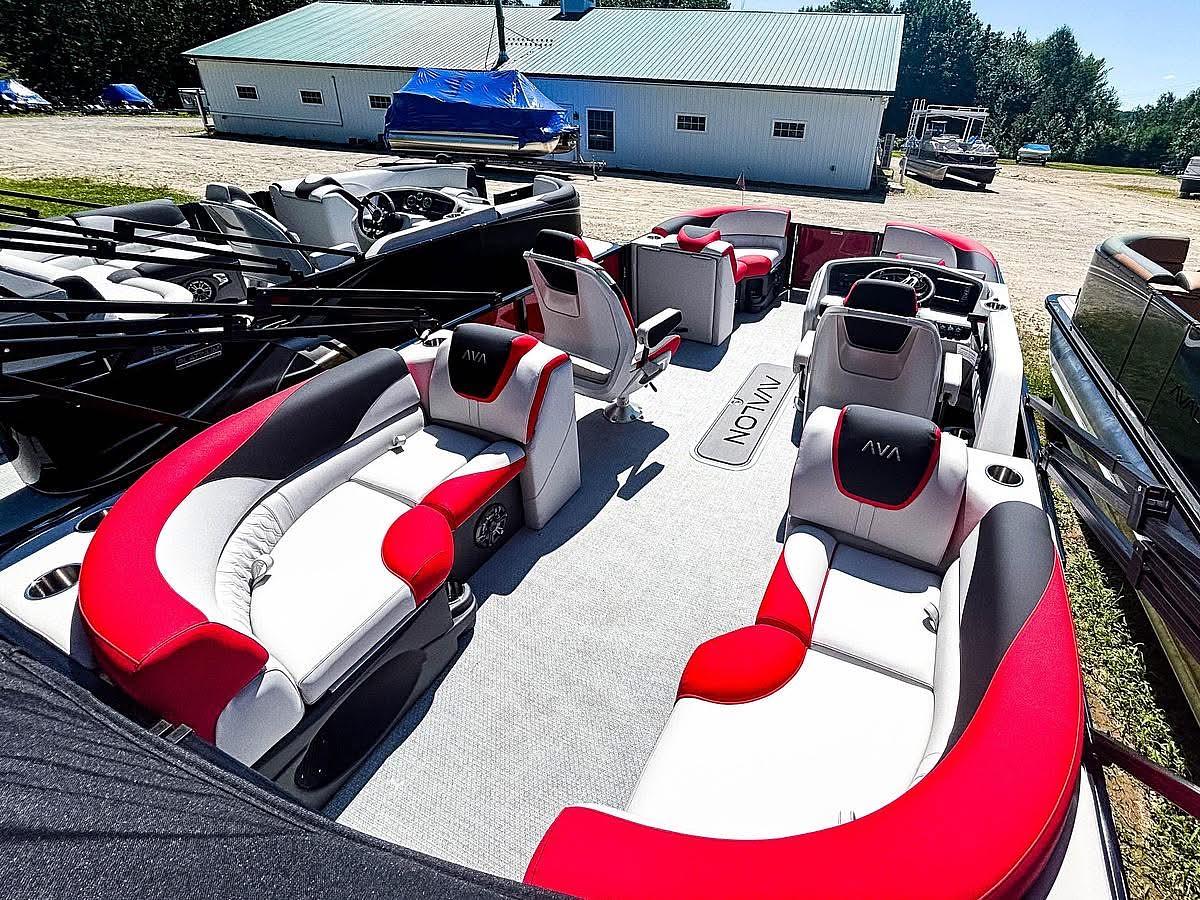
Let's move above deck for a moment.
I do appreciate beautiful upholstery.
I just happen to care considerably more about how it holds up than how it photographs.
A pontoon's furniture has a hard life.
Think about what we put it through.
Wet swimsuits. Sunscreen. Sunshine. Kids. Grandkids. Dogs. Food. Drinks.
And whatever mysterious substances people manage to spill on their boats.
When you're buying something that you intend to own for many years, furniture quality is worth paying attention to.
One of the Avalon upgrades I'm particularly fond of is Ultrafine vinyl.
I like its durability characteristics and think it's a worthwhile upholstery option for customers who place a high value on longevity.
Now, no upholstery is maintenance-free.
It still needs to be cleaned and cared for properly, and prolonged exposure to the elements will take its toll on just about anything.
But when I'm helping somebody evaluate a boat, I'm interested in how the furniture is constructed, what materials are used, and how the boat is likely to age.
Not just whether the seats look good today.
And while we're discussing upholstery, I should probably mention that I prefer white and buckskin interiors.
My family would also like me to mention that I once owned a boat with a beautiful dark interior, absolutely loved it, and somehow still refuse to recommend one.
I don't see how that's relevant.
We'll discuss that particular family disagreement in another article.
6. Seat Covers: The Least Exciting Purchase You'll Be Glad You Made.
Let's be clear about something.
Boat furniture is expensive.
Really expensive.
And if you've ever had to replace or reupholster pontoon seats, you know exactly what I'm talking about.
That's why I'm such a fan of seat covers.
They're not flashy.
They're not going to make your boat faster.
Nobody is inviting the neighbors over to admire their new seat covers.
But properly fitted covers can help protect upholstery from unnecessary sun exposure, debris, and everyday weathering when the boat isn't being used.
Over the life of a boat, that protection can be valuable.
I'm not suggesting that seat covers eliminate the need for proper cleaning, ventilation, or seasonal storage.
They don't.
But if you've invested good money in quality furniture, why wouldn't you want to protect it?
This is one of those upgrades that may not seem particularly exciting when you're configuring your new pontoon.
Ten years later, you might be considerably more appreciative.
And that's exactly the kind of thing I want customers thinking about before they buy.
7. Ski Tow Bars: If You're Going to Pull the Kids Around, Let's Do It Right.
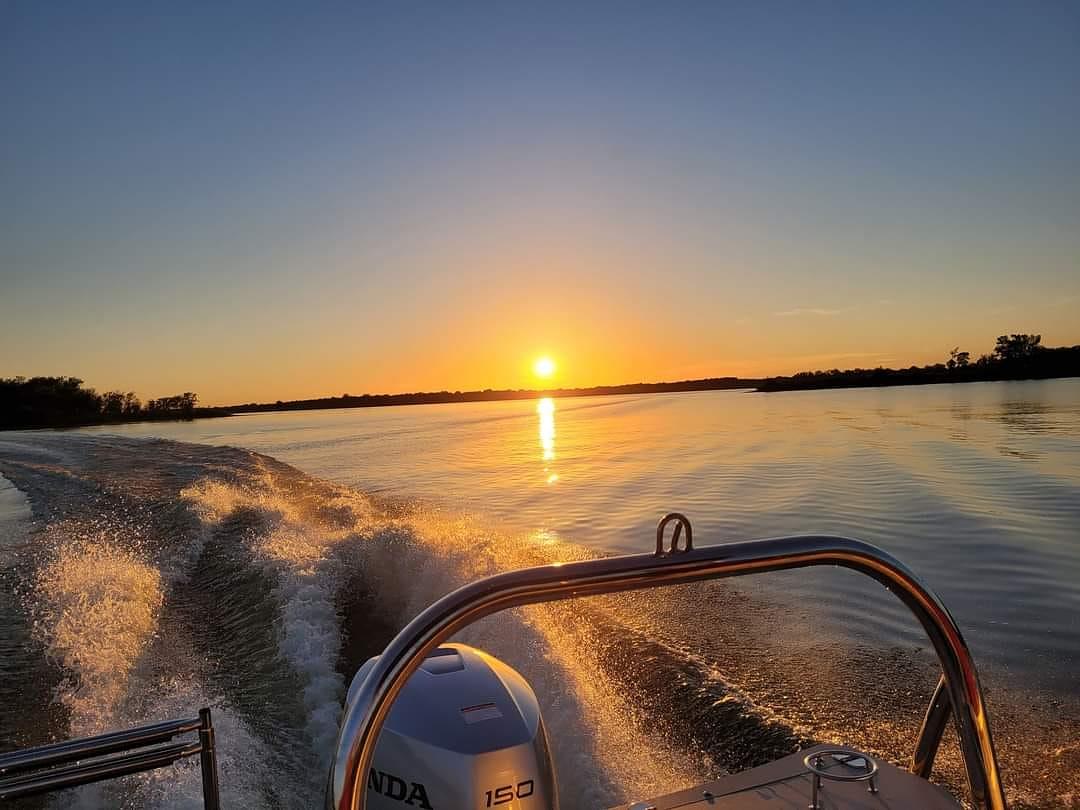
If your family plans to go tubing, a properly engineered ski tow bar or tow point may be a worthwhile addition.
I say properly engineered because towing people behind a boat isn't something I recommend improvising.
Different boats, tow bars, and tow points have different ratings and approved uses.
Something that's appropriate for one towing activity may not be suitable for another.
That's why we need to look at the manufacturer's recommendations and make sure the equipment matches what you're actually planning to do.
If you want to spend your afternoons pulling the kids around on a tube, tell us that when you're choosing the boat.
We'll discuss the right motor, pontoon configuration, and manufacturer-approved towing equipment.
If you're never going to tow anybody?
You may not need the option at all.
See? I'm perfectly capable of telling people not to buy something.
It happens more often than you might think.
8. Privacy Stations: Not Glamorous, But Awfully Convenient.
Finally, let's discuss something that might not be the most exciting addition to your pontoon.
A privacy station.
I know. Try to contain your enthusiasm.
But if you spend long afternoons on the lake with children, grandchildren, or friends, you might be surprised how convenient one can be.
People go swimming.
People need to change.
Little kids have a way of creating situations that require a little privacy.
And having an appropriate space aboard can make the day more comfortable.
For families who spend entire days on the water, I think it's an option worth considering.
Is everybody going to need one?
No.
But for the right family, it's one of those conveniences that can make boating easier and more enjoyable.
And ultimately, that's what we're trying to accomplish.
Before You Spend Money on Upgrades, Look at the Foundation.
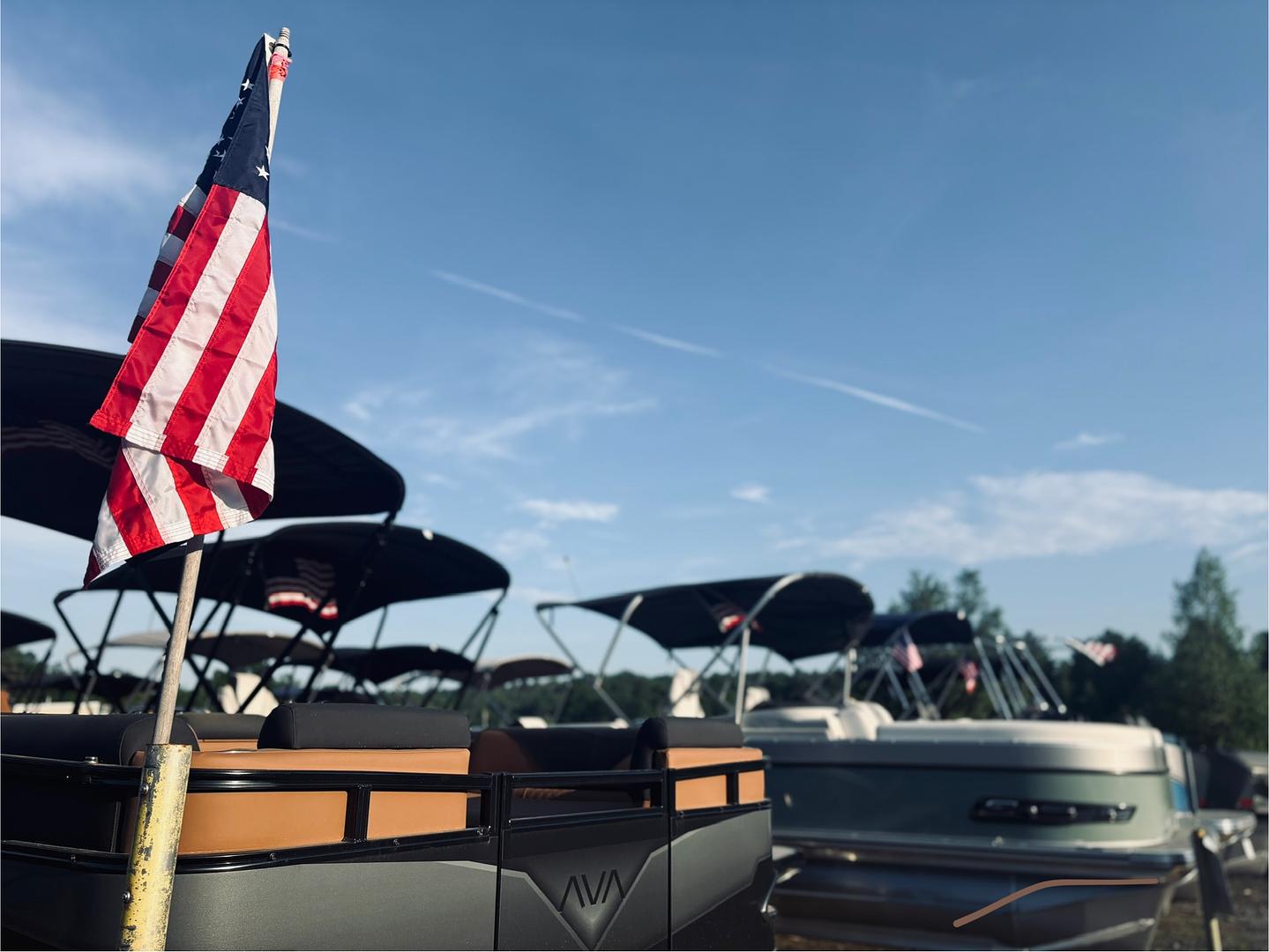
Now, I could easily give you another twenty features I like.
But there's something more important I want you to understand.
The first thing I evaluate on a pontoon isn't the accessories. It's the boat itself.
How are the pontoons constructed?
How are they attached to the deck?
What kind of structural support is underneath the floor?
How is the boat rigged?
Is the motor appropriate for the hull and the way the customer intends to use it?
Those questions matter a whole lot more to me than whether you've got illuminated cupholders.
One of the reasons I've enjoyed working with Avalon for so many years is the attention the company gives to construction.
Features such as full-length structural risers, appropriately designed crossmembers, protective keels, and performance packages are worth understanding.
Not every model has exactly the same equipment, so we'll look at the specifications for the particular boat you're considering.
But these construction details matter because the foundation of a pontoon is what everything else depends on.
And as a dealership that services boats long after they're sold, we get to see the results of those decisions.
That's something I'm very grateful for.
It gives us an opportunity to recommend products based on more than what looks attractive when it's brand new.
BONUS: The Avalon Platinum Edition — Because Sometimes the Little Things Make All the Difference.
There's one more recommendation I'll leave you with.
At Clark Marine, we're pretty particular about how we order our Avalon pontoons.
After nearly three decades representing Avalon, we've developed a good understanding of what makes these boats special.
And that's why we choose the Platinum Edition packages for our Avalons.
I like to think of the Platinum Edition as the finishing touch that brings an already beautiful boat to life.
Depending on the model, these packages include thoughtful upgrades to seating, upholstery, electronics, lighting, hardware, and other finishing details.
And while I'm usually the first person to tell you that you don't need every fancy feature available, I also know that some upgrades genuinely improve your experience on the water.
The Platinum Edition brings many of those details together in a package we're proud to offer our customers.
Now, I could go through every feature and explain why we love these packages, but we'd be here all day.
And my family has informed me that I've already written quite enough about pontoon features for one day.
So we'll save that conversation for another article.
Coming soon: Why Clark Marine Chooses the Avalon Platinum Edition — The Little Details That Bring a Great Pontoon to Life.
The Best Upgrades Are the Ones That Make Your Boating Experience Better.
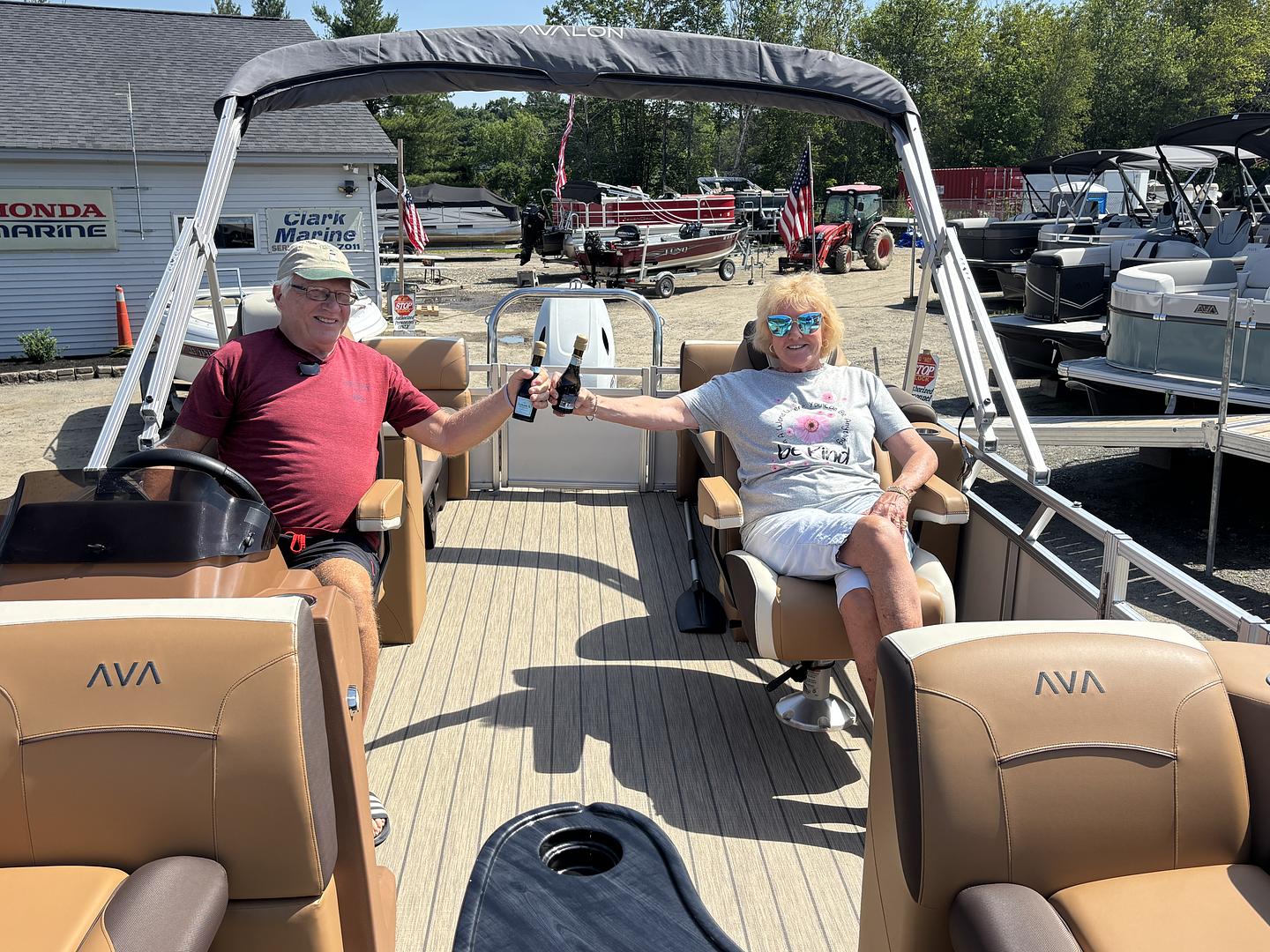
After 45 years in the marine business, I don't believe everyone should buy every upgrade.
Frankly, I don't believe most people need half the things available on some option lists.
But there are certain features I particularly appreciate because they help protect the boat, improve performance, or make boating more enjoyable.
And when I'm helping someone choose an Avalon, that's where I like to focus the conversation.
What will you actually use?
What will make your boat easier to enjoy?
What will help protect the investment you're making?
And what will still matter five, ten, or fifteen years from now?
Those are the questions worth asking.
If the answer is a properly configured tritoon with lifting fins, hydraulic steering, upgraded upholstery, seat covers, and every practical feature imaginable, fantastic.
If it's a simpler pontoon with the right motor and a few carefully selected upgrades, that's fantastic too.
The goal isn't to build the most expensive pontoon possible.
The goal is to build the right boat and spend your money where it counts.
And for the love of boating, at least let me show you the side keels.
Come See What Makes an Avalon Different.
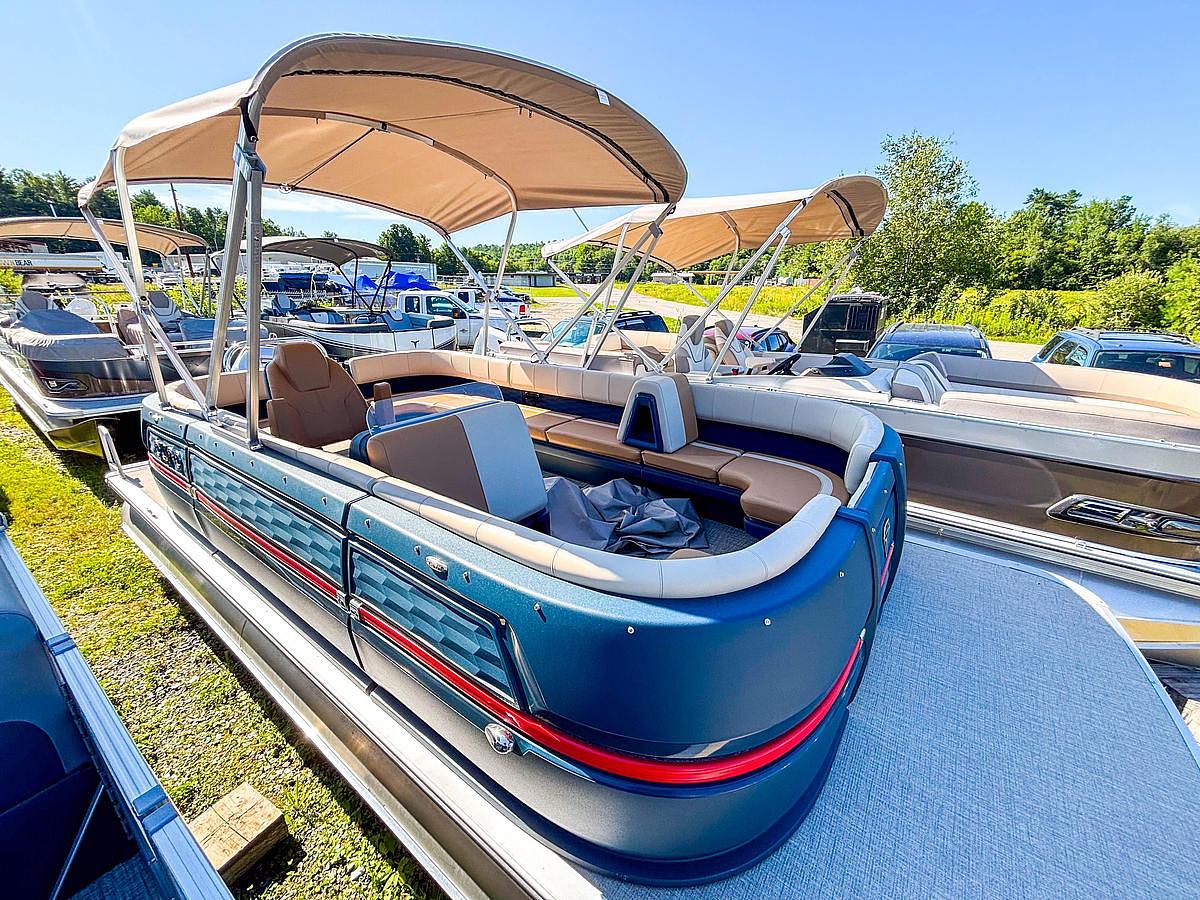
Clark Marine has been serving Maine boaters since 1958, and we've represented Avalon Pontoons since 1998.
I've spent more than 45 years in the marine industry, and I can tell you that understanding what goes into a boat is just as important as appreciating how it looks.
Whether you're shopping for a pontoon in Winthrop, Monmouth, the Belgrade Lakes, Cobbosseecontee, Sebago, Moosehead, or anywhere else in Maine, we'd love to help you explore your options.
We'll show you the floor plans, explain the motor packages, and help you understand the features that are worth considering for your family.
And if you want to see what's underneath the boat?
Even better.
That's my favorite part.
Explore Avalon Pontoons at Clark Marine or visit us in Manchester, Maine.
— Rob Brown, Master Marine Technician, Clark Marine
Frequently Asked Questions About Pontoon Features
What features should I look for when buying a pontoon boat?
Start with the fundamentals: pontoon construction, structural support, proper horsepower, rated capacity, steering, and hull configuration. Then consider protective keels, lifting fins, quality upholstery, covers, and other accessories based on your intended use.
Are side keels worth having on a pontoon?
Side protector keels provide additional protection along the outside of the pontoon tubes and can help buffer certain impacts with docks or other obstacles. They don't replace proper fenders or careful operation.
Is hydraulic steering worth it on a pontoon boat?
For many pontoons, particularly those equipped with higher-horsepower outboards, hydraulic steering can make operation smoother and less physically demanding. The appropriate steering system depends on the engine, boat configuration, and manufacturer requirements.
What's the difference between hydraulic steering and power-assisted steering?
Hydraulic steering uses a hydraulic system to transmit steering input from the helm to the engine. Power-assisted hydraulic steering adds assistance to reduce the effort required at the wheel. Not every boat needs power assistance, so the correct system should be matched to the application.
Do lifting fins make a pontoon faster?
Properly designed lifting fins can improve lift and certain performance characteristics, depending on the boat, horsepower, weight, and setup. They don't guarantee a particular increase in speed and should be evaluated as part of the complete hull-and-engine package.
Is upgraded pontoon upholstery worth the money?
For someone planning to keep a pontoon for many years, quality upholstery can be a worthwhile investment. Rob particularly appreciates Avalon's upgraded Ultrafine vinyl for its durability characteristics, while emphasizing that all marine upholstery requires proper care.
What is the Avalon Platinum Edition?
The Platinum Edition is an equipment package offered on selected Avalon models. Depending on the series, it can include upgraded seating, electronics, upholstery, lighting, and additional finishing features. Clark Marine chooses Platinum Edition packages because they create a thoughtfully equipped boating experience.